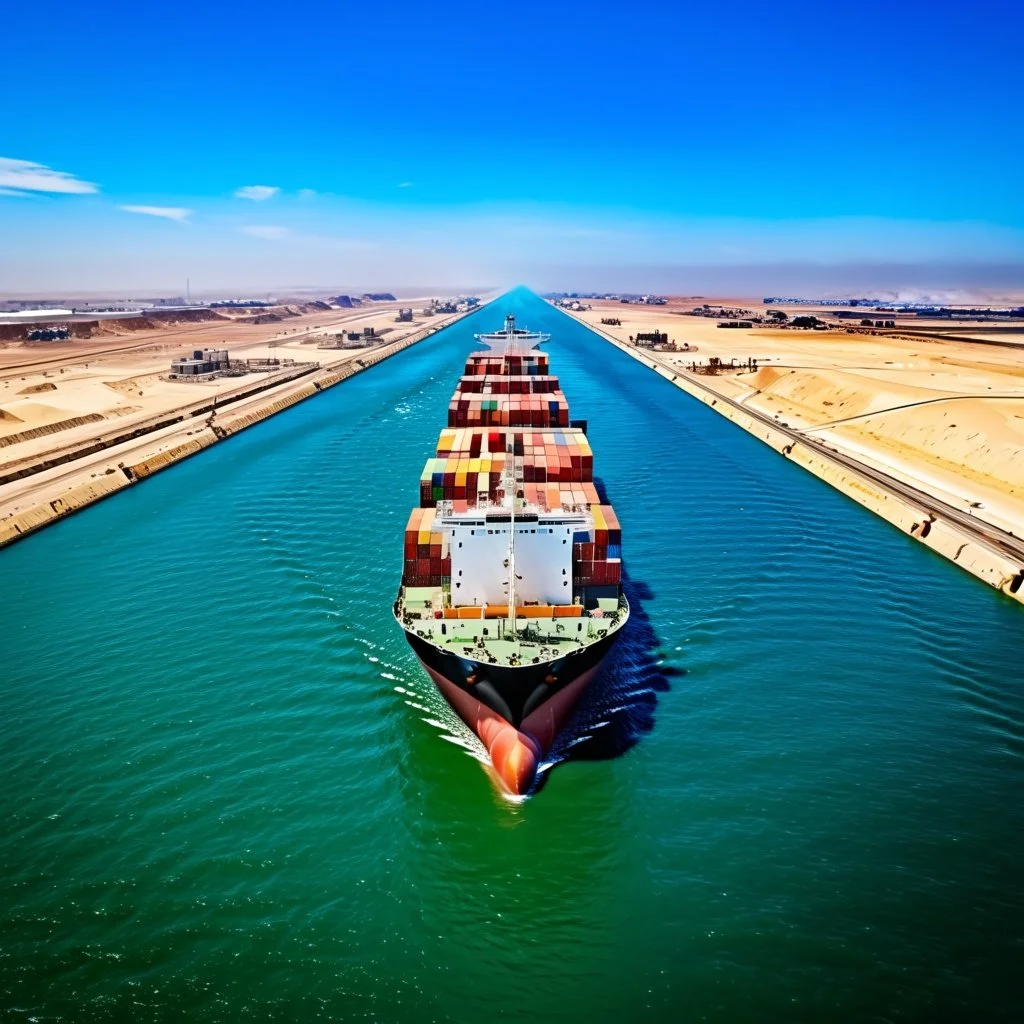
Selected Container Services Returning to the Suez Canal
Maersk and Hapag-Lloyd have announced that four additional joint container services will begin using the Suez Canal route instead of traveling around the southern tip of Africa.
The Suez Canal connects the Mediterranean Sea and the Red Sea, providing a shorter shipping route between Asia and Europe. Many ocean carriers had been avoiding the area because of security concerns in the Red Sea and were sending vessels around the Cape of Good Hope in South Africa instead.
That alternative route requires ships to travel a much longer distance.
What Is Changing?
Four additional container services will transition back to the Suez Canal route. Maersk and Hapag-Lloyd described this as part of a gradual return and stated that the change will provide more efficient transit times for customers using the affected services.
This does not mean that all container services are returning to the Red Sea or that shipping conditions throughout the region have returned to normal.
Commercial traffic through the Southern Red Sea and the Bab el-Mandab Strait—the narrow waterway ships must pass through to enter or leave the Red Sea from the south—remains below previous levels. Carriers are continuing to evaluate the security situation before deciding which vessels and services will use the route.
What Does This Mean for Shippers?
Customers with cargo moving between Asia and Europe may begin seeing changes to certain routes and sailing schedules. However, routing will continue to vary depending on the carrier and service selected.
Because regional conditions can change, shippers should confirm current routing and transit details when planning time-sensitive cargo.
Compass Forwarding will continue monitoring verified carrier announcements and maritime-security updates for developments that may affect customers’ cargo, routing and shipping schedules.